

Menu
Why AFI recommends Tarkett Powerbond
A floor worth
keeping.
For schools, businesses and nonprofits buying for long-term use, AFI recommends Powerbond over conventional carpet tile when spill protection and a floor worth keeping are the priorities. Its welded liquid barrier, closed-cell cushion and professional repair options give us strong reasons to put it first.
What is Powerbond?
Soft surface.
Resilient construction.
Powerbond Cushion is a hybrid resilient sheet flooring system: a nylon textile wear surface combined with a closed-cell cushion backing. Tarkett fuses those components with heat and pressure.
That construction gives a soft-surface floor a different foundation from conventional carpet. The cushion provides comfort underfoot, while the backing and properly treated seams work together to manage liquid spills.
Our preference is practical: manage spills above the backing, repair localized damage and preserve the surrounding floor. We confirm the product, substrate, installation and maintenance plan for your building before making the final recommendation.
Construction reference: Tarkett’s Powerbond construction overview.
01 / Nylon wear surface
The textile surface handles everyday traffic and gives the floor its pattern and texture.
02 / Closed-cell cushion
A resilient backing supports comfort and the system’s liquid-barrier performance.
03 / Prepared substrate
A suitable surface and compatible installation materials support the finished system.
The seam system matters
Fewer joints.
A connected barrier.
Powerbond sheet comes in nominal six-foot widths. Installers join the seams with the specified chemical seam-weld system. With the correct backing and properly completed installation, those seams connect the sheets into a continuous liquid barrier.
Keep cleanup above the barrier.
The closed-cell backing and welded seams help confine spills and cleaning water above the backing. The aim is to extract liquid and suspended soil from the textile surface while protecting the adhesive and substrate below.
A floor you can maintain.
A suitable cleaning program supports the surface’s continued service. Powerbond does not require stripping or waxing, and its cushion adds comfort and sound absorption for busy interiors.
Factory-certified installers.
AFI uses factory-certified installers for Powerbond. We carry preparation, adhesive compatibility, seam welding, edges and transitions through the selected product’s installation requirements.
Product references: Tarkett’s Powerbond backing and welded-seam description and maintenance and cushion benefits.
Professional repairs / Retained matching stock
Repair the area.
Keep the floor.
Individual replacement is not limited to carpet tile. Powerbond can be professionally patched when matching material has been retained. The damaged area is removed, a matching piece is fitted, and the repair edges are treated with the specified seam-weld system.
AFI plans repairs to blend with the surrounding installation. Matching the pattern and pile direction matters; dye lot, wear and lighting affect how visible the finished patch will be.
Keep labeled, matching attic stock from the original installation. It gives a future repair the best starting point.
Manufacturer references: Tarkett on Powerbond repairability and the documented matching-stock repair method.
- Retain the right materialKeep stock labeled with the product, color, lot and installation location.
- Make a fitted repairA professional plans the cut, pattern and pile direction for the damaged area.
- Complete the seam detailThe specified repair and seam treatment help restore the flooring system.
Actual AFI repairs / Grand Lake, Oakland
Bleach damage.
Targeted repair.
At Grand Lake in Oakland, AFI addressed bleach-damaged Powerbond with localized circular patches. Matching carpet recovered from another area of the project supplied the repair material, allowing the surrounding floor to stay in place.
This was a fitted repair of damaged material. Keeping matching stock available can give a future repair that same practical starting point.
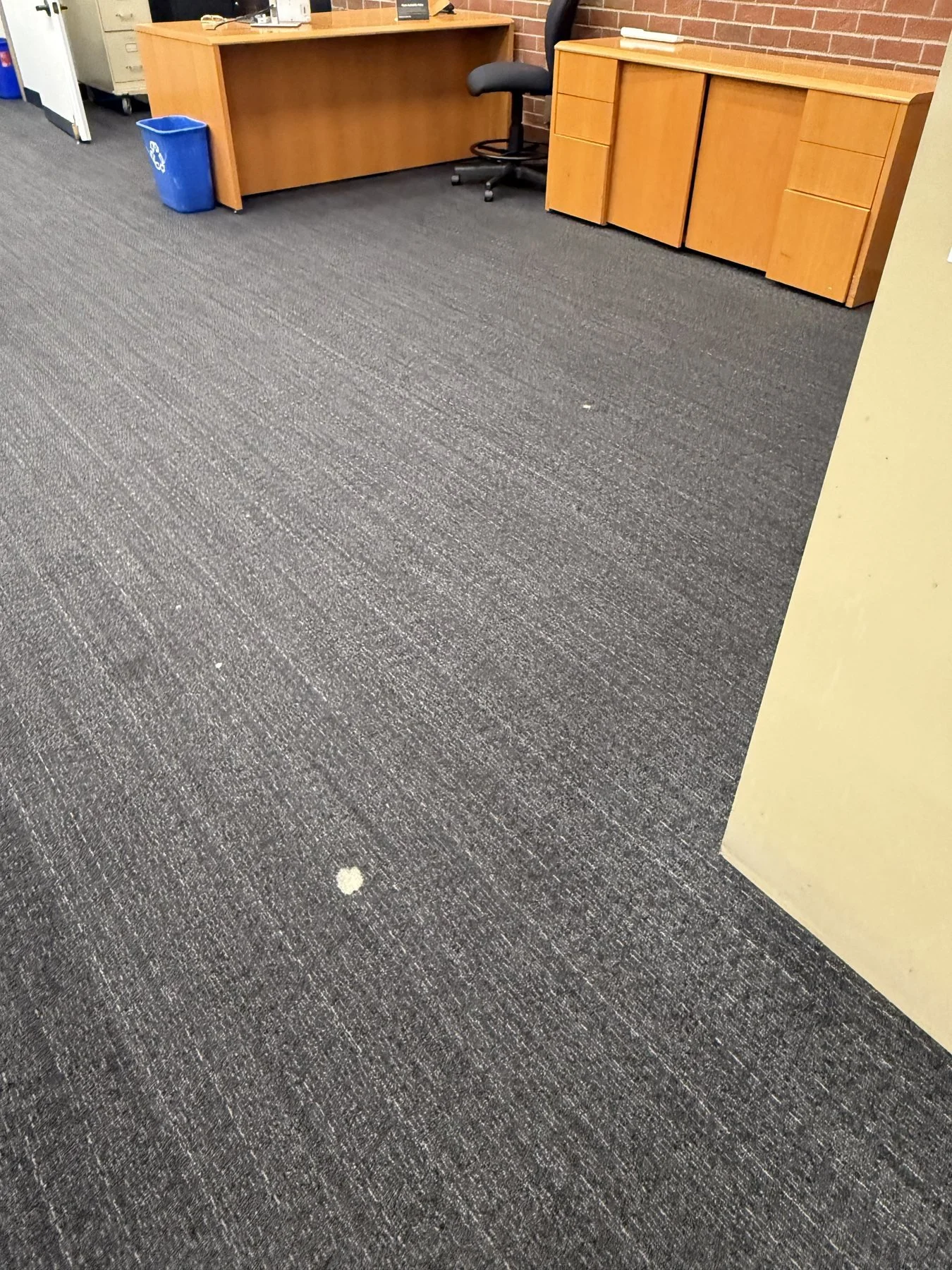
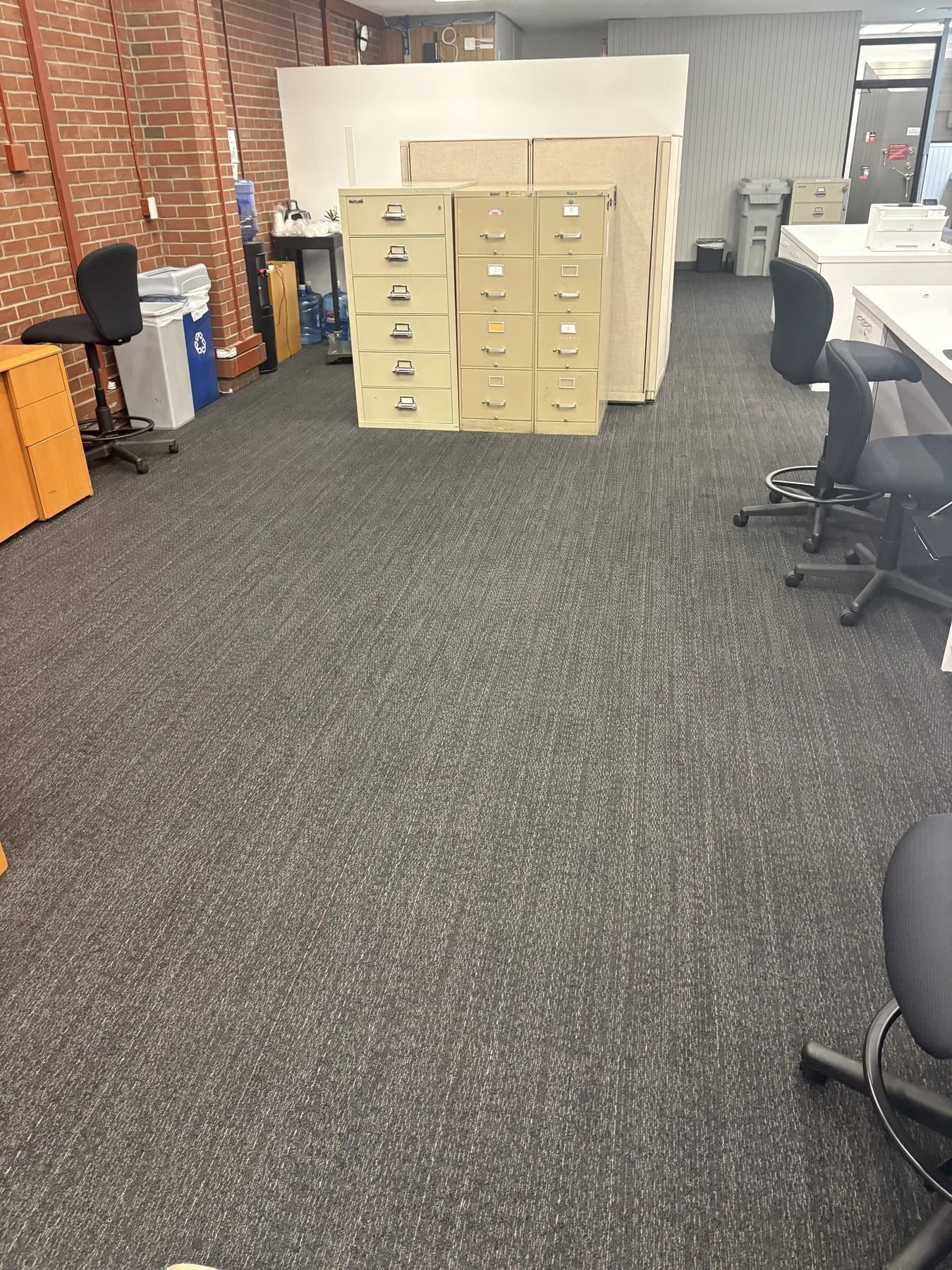
Actual AFI project photos, taken from different viewpoints and in different lighting. Repair appearance depends on the available matching material and the condition of the existing floor.
Ask about repairing your Powerbond floor ↗A 5,000-square-foot illustration
Same room.
A very different seam layout.
A 50-by-100-foot rectangle shows how format changes the number of internal joints. Carpet tile creates a grid; continuous sheet widths create long parallel seams.
24 × 24 in carpet tile
1,250 tiles · butt joints, not welded
6 ft Powerbond sheet
9 widths · chemically welded joints
Illustration assumes straight-set 24-inch square tiles and continuous 100-foot Powerbond runs. Each interior joint is counted once. Perimeter, columns, inlays and sheet end seams are excluded; the last sheet is trimmed to fit. Actual layouts and roll lengths vary. Seam length alone does not measure leakage or predict floor failure.
Cleaning / Spills / Recurring spots
Clean the spill.
Keep it from traveling deeper.
A spot that disappears during cleaning can return as the carpet dries. The Carpet and Rug Institute calls this wicking: liquid and residue in the backing move back toward the fiber tips. Leftover cleaning solution can also attract new soil.
Joints matter during cleaning.
Unwelded tile joints can provide a route for spills or excess cleaning water to reach beneath the covering. A moisture-resistant tile backing alone is different from a welded, wall-to-wall seam system. Actual product features vary.
Keep the cleanup accessible.
Powerbond’s correctly installed backing and welded seams are designed to hold surface liquid above the barrier. This helps keep spills out of the adhesive and substrate, where contamination would be harder to reach.
Extract, rinse and dry.
Tarkett’s care guide calls for thorough rinsing, extraction and drying. Residue within the textile surface can still cause recurring spots; the liquid barrier does not make every stain removable or eliminate the need for proper cleaning.
Cleaning references: CRI’s explanation of wicking, Tarkett’s Powerbond care guide and the welded liquid-barrier construction.
Why AFI prefers Powerbond / The practical tradeoffs
Repairability.
A connected liquid barrier.
Powerbond is our first recommendation when spill management, comfort and keeping the floor in service are central to the decision. Professional patching answers the repairability concern that often steers buyers toward carpet tile, while welded seams add a connected liquid barrier. Here is what we weigh with you.
| Consideration | Powerbond sheet | Modular carpet tile |
|---|---|---|
| Spills & cleaning water | Closed-cell backing and correctly completed chemical seam welds connect the sheets into a liquid barrier. This is the main reason AFI puts Powerbond first for spill-prone soft-surface areas. | Ordinary butt joints are unwelded and can allow liquid below the covering. A moisture-resistant backing is different from a connected seam system; spill-management features vary by product. |
| Spot repairs & matching stock | Damaged areas can be professionally cut out and patched, with matching material and the specified seam treatment. AFI’s Oakland example shows circular repairs while retaining the surrounding floor. | Individual modules can be lifted and replaced. This is a convenient advantage, although replacement appearance still depends on the design, available stock and existing wear. |
| Comfort & acoustics | Closed-cell cushion supports comfort underfoot and sound absorption, alongside the welded sheet construction. | Carpet tiles can also provide comfort and sound absorption. Cushion options exist; compare the actual backing and tested assembly rather than assuming a format is always better. |
| Seams & design | Nominal six-foot sheets create fewer joints than a small-tile grid. Patterns and custom inlays are possible; seam placement and pattern matching require careful planning. | Tiles and planks make modular patterns and selective design changes convenient. Their grid creates more joints; joint visibility depends on the product and installation. |
| Installation & future access | Roll handling, layout, seam welding and fitted repairs call for skilled work. AFI uses factory-certified Powerbond installers. Routine lifting for underfloor access is not the purpose of a welded sheet system. | Smaller units can simplify handling, phased changes and access to raised-floor panels with a suitable installation system. Floor preparation and product-specific installation requirements still matter. |
| Maintenance & service life | The barrier helps keep surface spills away from adhesive and substrate. Vacuuming, extraction, residue removal and drying remain necessary. Tarkett’s dated school examples document 34 and 37 years of service. | A durable tile with an appropriate maintenance plan can also serve well. Replacing individual worn areas is useful, but format alone does not establish a shorter or longer lifespan. |
| Installed cost & purchasing | AFI’s available A-grade Value Merchandise can make premium Powerbond more accessible, without a manufacturer product warranty. Regular-order products have applicable coverage. Compare the full installed scope and future care. | Product price, cutting waste, installation method, preparation, replacement stock and warranty vary. Tile may suit a particular layout or budget; a project quote is more useful than a blanket price comparison. |
Powerbond / What to plan around
Skilled details.
A repair plan.
Sheet layout, pattern matching, welded seams and future patches need professional attention. Retain labeled matching stock, allow for the actual room layout and keep a maintenance program. These are requirements we plan for so the system can deliver the benefits we recommend it for.
Carpet tile / Where it earns its place
Modular changes.
Frequent access.
Carpet tile may be the better fit where frequent raised-floor access, convenient module replacement or a particular modular design is the leading requirement. AFI can supply and install tile when it suits the job. Our preference for Powerbond comes from the priorities of the building.
Manufacturer guidance: Powerbond layout and seam requirements, modular carpet backing and comfort options and tile replacement and appearance considerations. Installation methods and regional requirements must be confirmed for the selected product.
Discuss Powerbond for your building ↗Manufacturer-documented service life
Innovation since 1967.
Decades of documented service.
Tarkett’s history dates Powerbond’s introduction to 1967. Its published school examples include Nederland Elementary School: installed in 1975 and recognized in 2012 after 37 years, and Westminster High School: installed in 1975 and recognized in 2009 after 34 years.
These are historical manufacturer examples, not AFI installations or claims that those same floors remain in service today. They show why a long-term flooring decision can look beyond initial purchase price.
For schools, nonprofits and businesses, useful service, repairability and maintenance deserve a place in the budget discussion. No fixed lifespan is promised for a new installation.
Historical references: Tarkett’s 1967 product history and dated school installation and award examples.
Explore AFI’s Simpson University work ↗
The floor beneath the product
Good floors start
below the surface.
AFI uses factory-certified Powerbond installers and plans the work as a system: suitable substrate, compatible preparation and adhesive, and properly completed seams and transitions.
That care applies to regular-order Powerbond and A-grade Value Merchandise alike. Product warranty coverage and installation workmanship are separate considerations, and the terms are identified in your proposal.
See the work beneath the finished floor ↗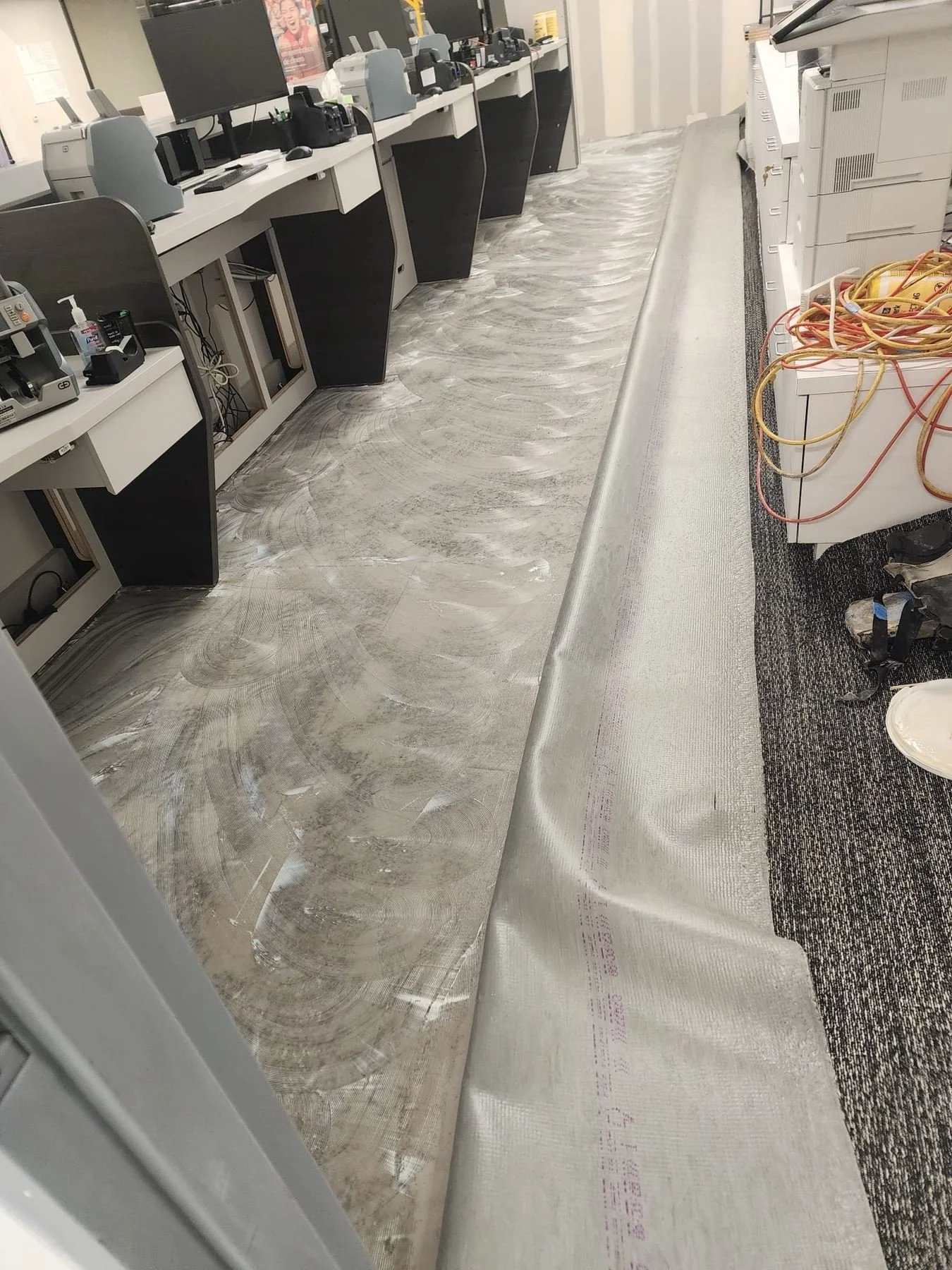
A product we believe in / Two purchasing paths
Make the material fit
the budget.
Regular-order Powerbond
Selection and manufacturer coverage.
Choose from available styles and colors for your project, with the applicable Tarkett manufacturer warranty subject to its terms and installation and maintenance requirements.
Review regular-order options ↗Redding Value Merchandise stock
A-grade product.
Closeout value.
AFI stocks thousands of yards of first-quality Powerbond from Tarkett Value Merchandise closeouts. It is A-grade product, not seconds or B-stock, and carries no manufacturer product warranty.
Ask about current local stock ↗Available styles, quantities and suitability are confirmed for each project. AFI installation and workmanship terms are stated separately in your proposal. Both purchasing paths receive careful preparation and installation.
Common questions
Understand the benefits.
Plan the details.
Can Powerbond be patched instead of replacing a whole room?
Yes. A professional can fit a repair using retained matching stock and the specified seam treatment. Pattern, pile direction, dye lot and the surrounding floor’s wear affect how well it blends. Retaining labeled attic stock is an important part of the original purchase.
Is Powerbond waterproof or flood-proof?
Correctly installed Powerbond backing and welded seams form a liquid barrier against surface spills. Ordinary carpet-tile butt joints are unwelded and can provide a route below the covering, even when the tile backing itself resists moisture. Specific tile systems differ. Powerbond still is not a flood-proof building system: water can enter at edges or penetrations, and flood recovery or warranty coverage must not be assumed.
Why can a spot return after carpet cleaning?
CRI identifies wicking from backing residue as one cause: moisture carries remaining soil toward the fiber tips as the carpet dries. Detergent residue can also attract new soil. Powerbond’s barrier helps keep spills from contaminating deeper layers below the flooring, but thorough cleaning of the textile surface is still needed.
Can it really last for decades?
Tarkett documents historical school installations recognized after 34 and 37 years of service. Those manufacturer examples are separate from AFI’s company history. They demonstrate long service is possible, not a guaranteed lifespan for every installation.
Does the Value Merchandise stock have the same warranty as regular-order Powerbond?
No. AFI’s A-grade Value Merchandise carries no manufacturer product warranty. Regular-order Powerbond is available with the applicable manufacturer coverage. AFI uses factory-certified Powerbond installers for both purchasing paths; installation and workmanship terms are identified separately in your proposal.
Buy for the space.
Plan for the years ahead.
Start with the flooring AFI believes in. We’ll review Powerbond for your building, explain the tradeoffs and compare regular-order choices with available Redding stock. Serving Fresno to the Oregon border, including the Bay Area.